How an Emirati family plans a majlis today
The majlis is the room many Emirati households plan a home around: a place for family, guests and neighbours, and the place where children first learn how a gathering works. Solomia Design, an interior design Dubai studio with more than 17 years of practice, is often asked to fit that room into villas and apartments where space, light and furniture all have to be settled before the first guest arrives. A family that knows what the room is for can answer those questions in a few minutes.
In brief
- Decide first who the room serves: daily family use, receiving guests, or larger occasions such as weddings and condolences.
- Plan seating along the walls, a clear place for coffee service, and the women's majlis as a room in its own right.
- Keep the room open to children, because that is how the manners attached to it are passed on.
What is a majlis for in a family home?
UNESCO describes majlis as sitting places where community members gather to discuss local events, exchange news, receive guests, socialise and be entertained. The same room is where a community resolves problems, pays condolences and holds wedding receptions, so a family majlis is rarely used for one purpose alone. The tradition was inscribed in 2015 on the Representative List of the Intangible Cultural Heritage of Humanity.
The UAE Government portal traces the idea to the days when ruling sheikhs camped in villages and held informal meetings in large tents to settle questions about trade, housing, health and the well-being of the people. Those meetings were called Barza or Majlis, the Arabic words for gatherings, and drew Emiratis in large numbers. The portal adds that Emirati families still live close together and hold regular gatherings at home, and it describes Emiratis as warm hosts who treat guests with the utmost honour.
Which objects and furnishings does the room need?
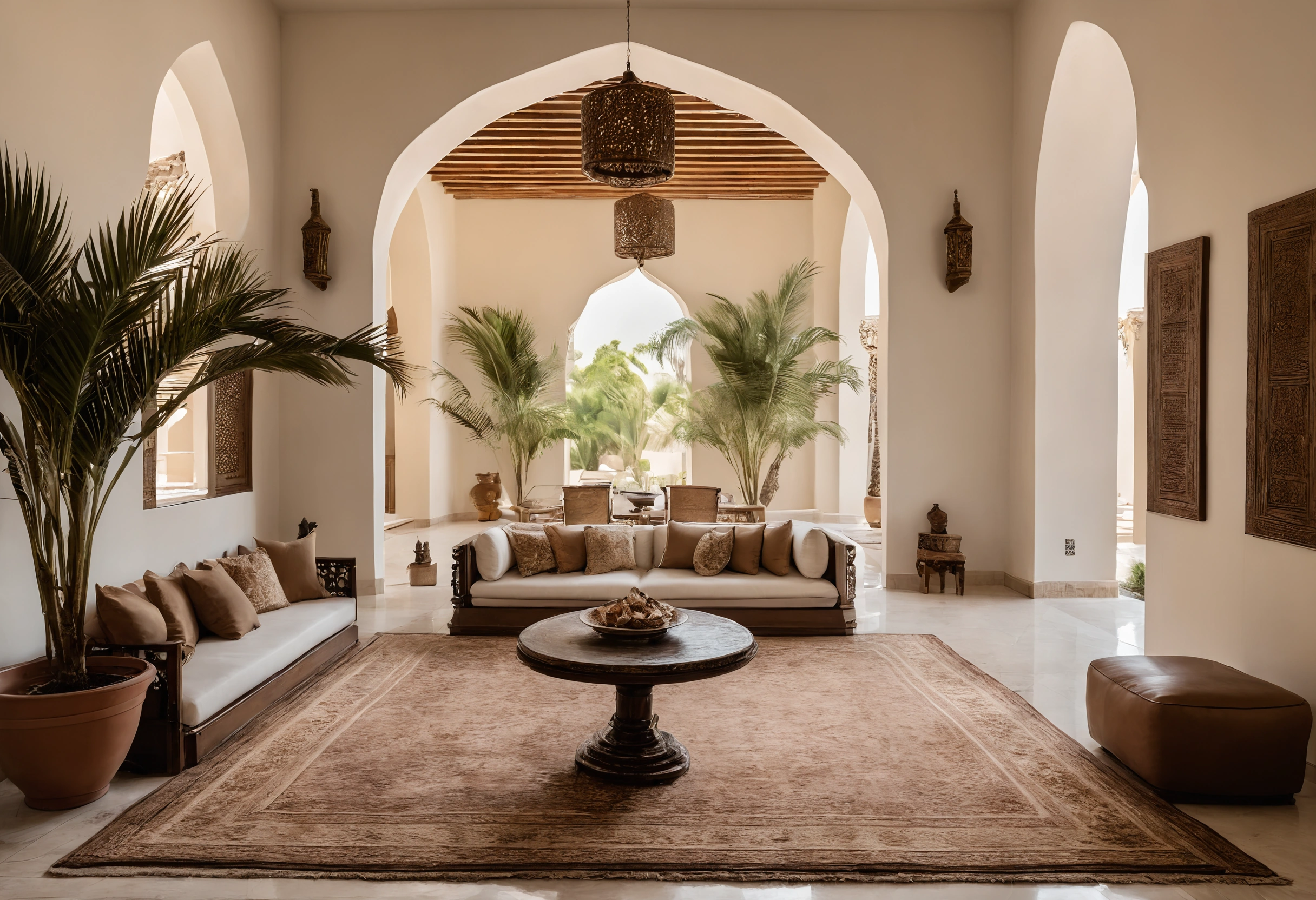
UNESCO describes the majlis as typically a large space with carpets on the floor and cushions against the wall, usually with a stove or fire to make coffee and other hot drinks. For a family planning one today that is a short brief: a floor for carpets, seating along the walls, and a corner for coffee.
Elements of a majlis, UNESCO Intangible Cultural Heritage entries for the majlis and for Arabic coffee, inscribed 2015
- Carpets on the floor | What it is for: Seating and gathering space for family, neighbours and guests | Source: UNESCO, Majlis
- Cushions against the wall | What it is for: Seating for a room that is open to all age groups | Source: UNESCO, Majlis
- Stove or fire | What it is for: Preparing coffee and other hot drinks for guests | Source: UNESCO, Majlis
- Arabic coffee service | What it is for: Offering hospitality; older people and guests are served first, and the coffee is poured with the right hand | Source: UNESCO, Arabic coffee
- Separate women's majlis | What it is for: A gathering of the household's women, in addition to the main room | Source: UNESCO, Majlis
How does coffee service shape the room?
UNESCO also lists Arabic coffee as a symbol of generosity, served at weddings and tribal gatherings, with rules of etiquette passed down informally from one generation to the next. Older people and guests are served first, the coffee is poured with the right hand, and a guest who has had enough shakes the cup to say so.
The host who pours needs room to move along the seating without stepping over anyone, a surface within reach for the pot and cups, and a way to keep the drink hot. In a gathering, UNESCO notes, the coffee is often accompanied by recited poetry, lively discussion and the exchange of memories, so the seating should also let people talk to one another across the room.
What do women's majlis and children's lessons mean for the plan?
UNESCO records that women have their own majlis, although some prominent women attend other majlis that are academic or literary in nature. A household that wants both a main room and a women's room should settle where the second one sits and how it is reached, so that each can be used on its own and each can receive guests when the occasion calls for it.
Children belong in the plan from the start. Majlis spaces are open to all age groups, and UNESCO explains that knowledge is mostly transmitted informally as children accompany community members on their visits. By watching elders in the room, young people learn the manners and ethics of their community, dialogue and listening skills, and respect for the opinion of others. A room that children can enter and sit in comfortably does that teaching without any formal lesson. Families who want a practical introduction to those manners can read majlis culture and visitor etiquette and heritage learning for children on this site.
How do families fit a majlis into an apartment?
World Bank data puts the urban share of the UAE population at 85.96 per cent in 2025, out of 11,513,149 residents. Most households live in cities, often in apartments, so the majlis may be one room or a corner of a larger one. Carpets, wall seating and a coffee corner still serve a family that receives guests.
For a family weighing the choice, the questions are the same in a villa or a flat. Who will sit here every day, and who only on occasion? Where does the coffee come from, and who serves it? Can the women's gathering have a room of its own, or a screen and a separate entrance? Answer those first and the furniture follows. Guests will find practical advice in guest etiquette in the UAE, and more on household traditions is collected under For families.